DVIDS – News – Fort Sill Garrison Keeps Mission Moving During 42-Day Government Shutdown

FORT SILL, Okla. — Long before sunrise, drill sergeants called cadence on the PT fields, DFAC teams fired up grills and MPs checked IDs at the gate. Classrooms filled, buses rolled and ranges went hot.
For 42 days this fall, garrison organizations quietly kept the post running and training on track for the soldiers and families who depend on them, even as Fort Sill operated under a government shutdown.
The shutdown began when Congress did not pass new funding on time and annual appropriations lapsed. At Fort Sill, that meant some civilians were furloughed without pay and told to stay home, some were “excepted” and kept working without pay because their jobs were essential, and others were “exempt” and continued working as normal with pay because they are funded differently.
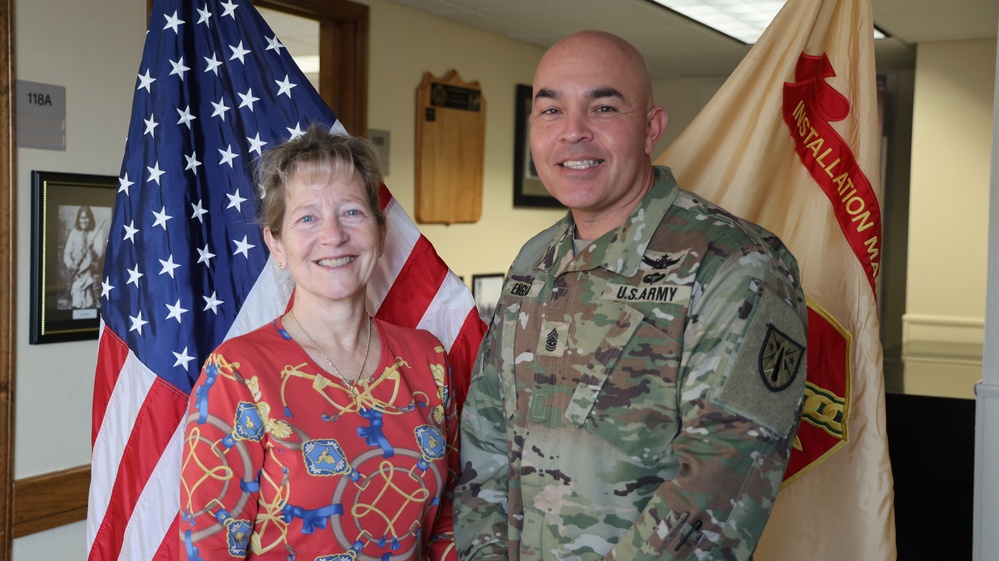
“Our civilians may not wear the uniform, but they’ve taken an oath to serve just like our soldiers,” said Julia Sibilla, deputy to the garrison commander. “Whether they were excepted and working without pay or furloughed and waiting at home, they all carried the uncertainty together. What impressed me most was how committed they stayed to taking care of each other and keeping this community moving forward.”
Keeping the bills paid and paychecks on track
The Resource Management Office was one of the engines that kept the installation functioning, mostly out of public view.
Initially, none of RMO’s jobs were excepted. As the lapse continued, it became clear that pay, contracts and utilities could not be put on hold. Acting Director Chris Zerzavy and his team brought back key staff in phases to process payroll, support legally excepted contracts and pay critical bills.
RMO worked with the Staff Judge Advocate and higher headquarters to keep essential contracts funded, processed payroll three times for the garrison workforce and ensured utility bills were paid so facilities could stay open and safe.
“The real test hit when everyone came back,” Zerzavy said. “We had to redo timecards for more than 500 people across three pay periods under very specific guidance so everyone’s back pay would be right. There were system issues, late nights, early mornings and weekend work, but the team never lost sight of the goal, taking care of our employees.”
“Our message to the workforce is simple: we’re here to support you, and we’re going to attack the backlog deliberately and transparently,” he said.
Logistics without a pause
If basic and advanced individual training at Fort Sill felt almost normal to new soldiers, it was largely because the Logistics Readiness Center never stopped.
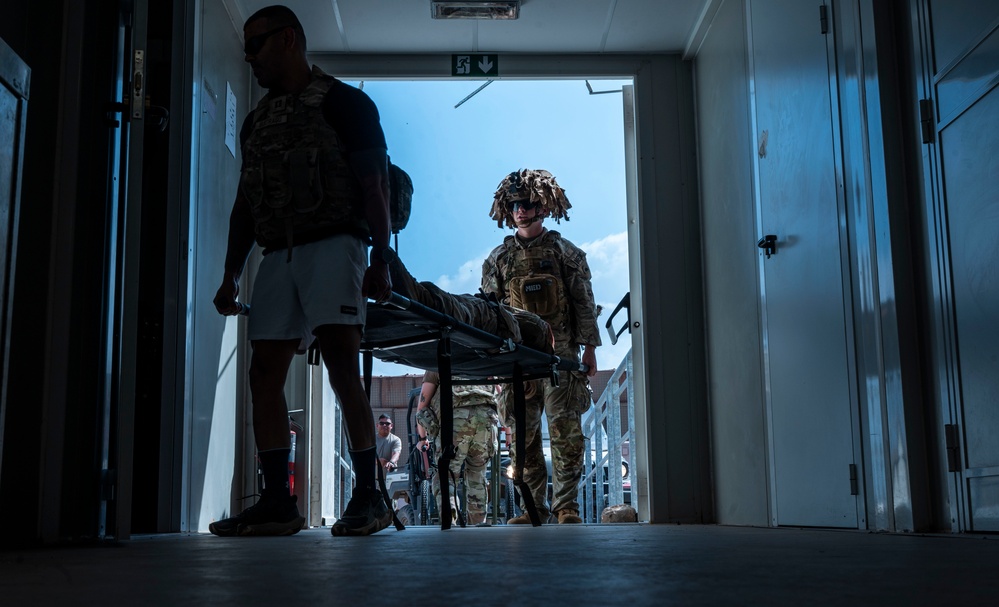
LRC is the primary logistics support for the installation’s training brigades, so most of its workforce was designated excepted. Uniforms and equipment kept moving through the Central Issue Facility and Clothing Initial Issue Point, DFACs stayed open, weapons and vehicles were maintained, and ammunition, rations and critical moves for excepted permanent change of station and expiration of term of service cases continued.
“From the first day of the shutdown, our mission was clear: the training pipeline could not stop,” said Sprague Taveau, LRC director. “If a function touched initial entry training or a soldier’s life, health and safety, LRC stayed on the job.”
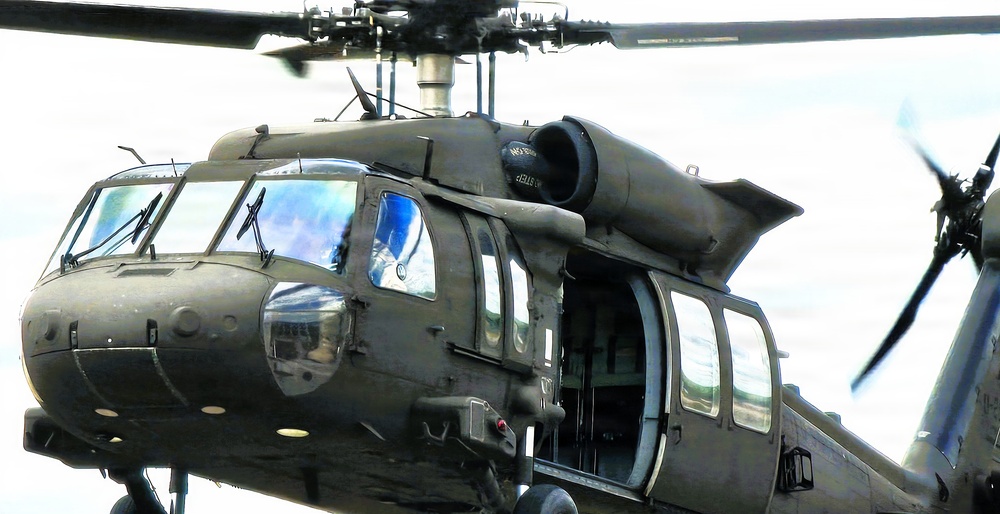
LRC’s reach also extended to Lawton Regional Airport, where transportation personnel helped receive redeploying units and move them back to post.
“Many of our civilians were supporting 24/7 training and redeployments while worrying about their own paychecks,” Taveau said. “Some picked up second jobs in the evenings just to make ends meet. As we worked through maintenance and supply backlogs, we asked units to be patient, but we did everything we could to keep the impact on soldiers as invisible as possible.”
Operations stripped to the essentials
For the Directorate of Plans, Training, Mobilization and Security, the shutdown meant focusing only on what absolutely could not fail.
“With a skeleton crew, we boiled it down to the basics: range safety, emergency operations, security and support to training,” said DPTMS Director Glenn Waters. “It wasn’t about doing everything, it was about doing the few things that could not fail.”
Waters said one of the biggest lessons learned was how quickly directorates pulled together across organizational lines.
“I watched operations, security, housing, logistics and public affairs lean on each other daily,” he said. “That’s the kind of teamwork you hope you’ll see in a crisis, and our people delivered.”
Families, readiness and quiet safety nets
Some of the most intense work during the shutdown happened in spaces many people never see.
The Family Advocacy Program at Army Community Service, led by Program Manager Margarita De Leon, continued mission-essential safety, prevention and family support functions. FAP, the New Parent Support Program and the Exceptional Family Member Program maintained 24/7 response, high-risk case management, home visits and EFMP support so families still had access to safety and care.
“Even during the furlough, we couldn’t hit the pause button on safety,” De Leon said. “Family safety, readiness and access to care are not optional, they’re fundamental to Fort Sill’s ability to do its mission.”
On the financial side, ACS saw a spike in demand for Army Emergency Relief and financial readiness services as families dealt with delayed paychecks. AER provided emergency help for essentials like food, utilities and rent, while ACS staff connected families with diapers, wipes and basic infant care items.
Community partners also stepped in. The American Red Cross Hero Care Center and Service to the Armed Forces, which is not funded through federal appropriations, continued full operations throughout the shutdown.
“The shutdown didn’t stop our mission,” said Ribana Washington, office coordinator and administrative assistant with the Red Cross. “In a time when so many offices were disrupted, we wanted Fort Sill to know they could still count on us 24/7 for emergency messages, resource connections and support.”
FMWR: the exempt heartbeat of the installation
While many garrison employees were furloughed or working without pay, Fort Sill Family and Morale, Welfare and Recreation never closed its doors.
Funded by nonappropriated dollars, most FMWR employees are considered exempt from a shutdown. They worked straight through the 42-day lapse, keeping programs and events going for soldiers and families who needed connection, routine and a reason to smile.
“Even when things get tough, we don’t stop showing up for our soldiers and their families,” said Sarah Gersper, director of Family and MWR. “The programs and events are about giving people a place to connect, recharge and feel like they belong here.”
During the shutdown, FMWR kept runs, seasonal events and unit gatherings on the calendar, from Oktoberfest and Halloween activities to Stable Call and weekly Gridiron nights so families still had reasons to come together and celebrate.
Strengthening wellbeing and a place to “get away”
Even as some services on post were reduced or operating with fewer staff, one familiar presence stayed steady, USO Oklahoma.
USO Oklahoma continued all its day-to-day operations in support of service members and families. Senior Operations Manager Bobby Woolridge said the shutdown changed the tone of their work, but not the mission.
“A big part of our operation is powered by volunteers,” Woolridge said. “By keeping the lines of communication open with them and our partners, we were able to keep every program going and adjust quickly as units asked for more help with morale.”
On Fort Sill, the center kept its normal rhythm, so soldiers and families had a place that felt familiar and welcoming.
“We made a very conscious decision to stick to our schedule here,” Woolridge said. “Programs like Franks for Your Service, Fueling Our Forces and Nacho Your Average Thursday stayed on the calendar, because for a lot of people that hot dog, that plate of nachos or that cup of coffee is a moment to breathe.
“We wanted service members and families to know that even if other services were scaled back, there was still a place on post where they could relax, connect and just be themselves for a little while,” he said. “Our mission is to stand by the side of those who serve, and that doesn’t stop when the government shuts down.”
Keeping people moving: personnel and human resources
While some organizations focused on equipment, facilities and security, the Directorate of Human Resources focused on people, their records, IDs, transitions and testing, and did it with more than half the team designated as excepted.
“I always wanted to experience being part of a team that set a U.S. record, but being part of the longest federal shutdown was not what I had in mind,” said Lorenzo Heller, director of military programs, who oversees DHR.
Key sections such as the Military Personnel Division, ID cards and Transition Assistance stayed on the job to keep the installation’s personnel systems moving. More than half of DHR was excepted, and Heller said they “did a phenomenal job supporting the Army community.”
The real surge hit when funding was restored and furloughed teammates returned. In the weeks after the shutdown, DHR worked through hundreds of rescheduled appointments, shipped thousands of drug-testing samples to Army labs and pushed to get soldiers their DD 214s, the discharge documents they need to access benefits earned through service.
“This furlough gave us the opportunity to see DHR employees at their best, keeping the installation moving during a challenging time in our nation,” Heller said.
Police, fire, housing and infrastructure
While some garrison offices were quiet, others never slowed down.
At the Directorate of Emergency Services, police, fire and 911 dispatchers continued to answer calls, staff the gates and respond to incidents around the clock.
“Crime, fire and emergencies don’t stop for a shutdown,” said Lt. Col. Chafac Mofor, provost marshal and DES director. “Our military police, civilian officers, firefighters and dispatchers kept coming to work, often unsure when their next full paycheck would arrive, because they understood the community was counting on them.”
At the Directorate of Public Works, a reduced team focused on keeping water, power, heating and cooling systems running and responding to emergency work orders in family housing and barracks.
“We had to make some hard calls about what could wait and what absolutely couldn’t,” said Deb Porter, DPW director. “If it involved safety, sanitation or keeping a facility mission capable, we found a way to get it done. Our folks showed up day after day, often with fewer hands-on deck, because they knew a broken boiler or a burst pipe can stop training just as fast as a broken vehicle.”
“Residents might see us playing catch-up on routine work for a while,” she added. “But we’re working through it as quickly as we can, with a clear priority on safety and quality of life for those who live and work on Fort Sill.”
Shared uncertainty, shared resilience
For both furloughed and excepted employees, the shutdown brought a common thread: uncertainty. Some worried about immediate bills. Others wondered when, or if, back pay would arrive. Even exempt employees and soldiers felt the strain as they watched spouses, co-workers and friends navigate weeks without normal income.
Sibilla said the experience revealed both vulnerabilities and strengths across the garrison.
“The vulnerability is obvious, a lapse in appropriations hits our people directly in their wallets and creates stress we can’t fully cushion,” she said. “The strength is that, even under that stress, our civilians and soldiers stood shoulder to shoulder. They kept training, feeding, housing and protecting people. They checked on each other. They found ways to keep the mission moving.”
For Fort Sill, the shutdown is now part of its history, a difficult chapter, but one that showcased the resilience of the garrison’s workforce, its community partners and the Lawton–Fort Sill community as a whole.
“We’ll be digging out of backlogs for a while,” Waters said. “But if there’s one thing this experience proved, it’s that this installation can take a punch and keep moving. That’s not by accident. It’s because of the people who choose to serve here, in and out of uniform.”
 Private Internet Access gives you unparalleled access to thousands
of next-gen servers in over 83 countries and each US state. Your
VPN experience will always be fast, smooth, and reliable.
Private Internet Access gives you unparalleled access to thousands
of next-gen servers in over 83 countries and each US state. Your
VPN experience will always be fast, smooth, and reliable.