251116-N-HD763-1392 DOHA, Qatar (Nov. 16, 2025) A Qatari marine, assigned to the Qatari Emiri Navy, secures a space during a close quarters combat training aboard the Qatari Barzan-class fast attack missile craft Al Deebel (Q07) during Exercise Ferocious Falcon 6 in the U.S. Central Command area of responsibility. Ferocious Falcon 6 is a biennial, Qatar-hosted multinational joint exercise designed to enhance lethality and combat efficiency among U.S. and allied forces. (U.S. Navy photo by Mass Communication Specialist 2nd Class Iain Page)
Date Taken:
11.16.2025
Date Posted:
11.23.2025 09:14
Photo ID:
9405515
VIRIN:
251116-N-HD763-1392
Resolution:
7015×4677
Size:
4.58 MB
Location:
DOHA, QA
Web Views:
3
Downloads:
0
PUBLIC DOMAIN
This work, Coalition forces conduct close quarters combat training during Exercise Ferocious Falcon 6 [Image 10 of 10], by PO2 Iain Page, identified by DVIDS, must comply with the restrictions shown on https://www.dvidshub.net/about/copyright.
New partnership expands Fortress’ role in strengthening Navy-wide cyber supply chain resilience with integrated software, analytics, and risk mitigation services.
ORLANDO, Fla., Nov. 20, 2025 /PRNewswire/ — Fortress Government Solutions LLC (Fortress) is proud to announce it has been awarded an indefinite delivery/indefinite quantity (IDIQ) contract to support the Naval Air Systems Command (NAVAIR) in the development and sustainment of a vital Cyber Supply Chain Risk Management (C-SCRM) capability. This award marks a significant continuation of Fortress’s expanding partnership with the Department of Defense.
With this new contract, Fortress deepens its role in fortifying the Navy’s cyber supply chain resilience across NAVAIR, its subordinate commands, and partner Navy organizations. The company will deliver cutting-edge software, analytics, and integration services that protect mission readiness and operational effectiveness in a complex threat landscape.
“We are honored to deepen our partnership with the Department of the Navy and play a pivotal role in strengthening cyber supply chain protections, ensuring the lethality of the weapons systems used by our men and women in uniform,” said Don Archer, President of Fortress Government Solutions. “This contract award brings Fortress’s commercial expertise to the battlefield and provides program executives a suite of tools to combat Chinese, Russian, and other adversarial actors’ incursions in our cyber supply chains. Derived from our AI enabled tools that protect critical infrastructure for the U.S. energy and utility sector, Fortress will deliver immediate risk reduction to forces at speed and scale, putting mission readiness and warfighter lethality front and center.”
Under this IDIQ contract, Fortress will provide a comprehensive suite of Cyber Supply Chain Risk Management (C-SCRM) capabilities, including licensed software, advanced analytics, reporting, and systems integration, to help NAVAIR and its commands proactively identify and mitigate cyber supply chain risks. This capability is crucial for maintaining the readiness, safety, and operational effectiveness of Navy weapons systems. The contract also streamlines procurement and accelerates deployment of Fortress’s proven solutions, solidifying its role as a trusted partner across the Navy’s network.
As cyber threats increasingly target defense supply chains, Fortress delivers scalable, actionable insights that enhance mission readiness and operational security. Supported by experts in cyber threat intelligence and risk analytics, these solutions transform complex data into clear, timely intelligence to support critical decision-making.
“We welcome the Department of Defense’s recent steps to tighten controls around cloud, technology, and supply chain pathways to reduce exposure to adversarial nations,” said Don Archer. “This IDIQ enables Fortress to operationalize that direction for the Navy by delivering transparent, scalable CSCRM capabilities, combining software, analytics, chains, and teams’ integration to remove risky vectors, improve visibility across supplier ecosystems, and accelerate protection of mission-critical platforms from actors seeking to exploit our supply chains.”
About Fortress Government Solutions LLC
Fortress Government Solutions complies with Executive Order 14017 to Secure America’s Supply Chains, E.O. 14028 to secure software development, has committed to the CISA Secure by Design pledge, American Institute of Certified Public Accountants SOC 2 compliance, meets all National Institute of Standards and Technology 800-53 SCRM requirements, and is certified at CMMC Final Level 2.
Los Angeles Fire Department fireboats are continuing firefighting operations to stop fire aboard cargo vessel One Henry Hudson off the Port of Los Angeles, Nov. 22, 2025. A unified command was established consisting of Los Angeles Fire Department, Coast Guard, L.A. Port Police was stood up to respond to this incident, when the fire started Friday night. (U.S. Coast Guard Photo by Petty Officer 1st Class Kody Sparks)
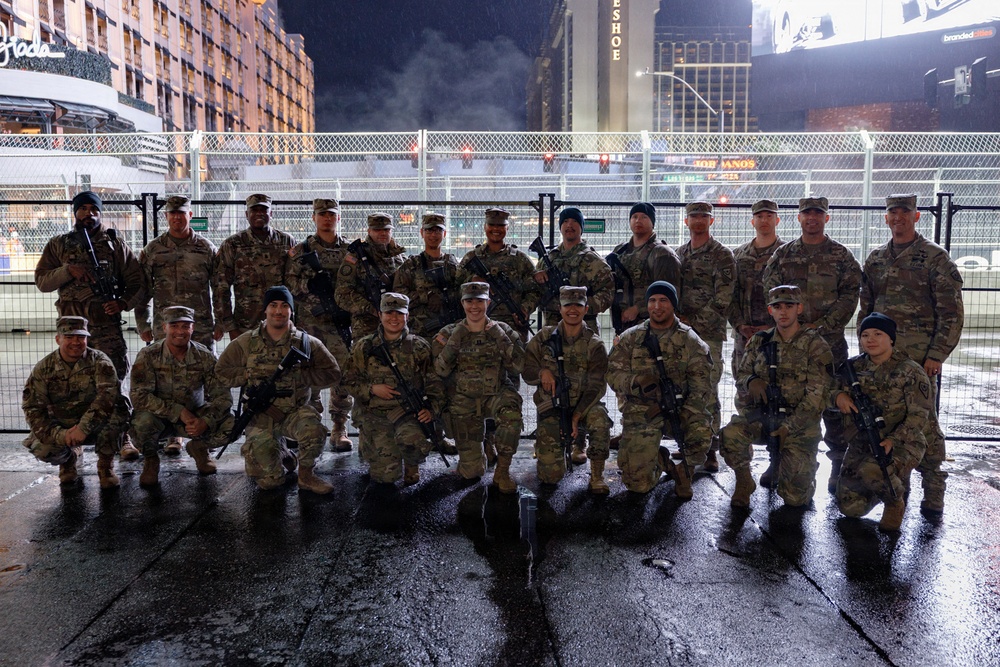
Nevada National Guard Completes Third Year of Formula 1 Support in Las Vegas
LAS VEGAS – About 130 Soldiers and Airmen from the Nevada National Guard supported local first responders during the 2025 Formula 1 Las Vegas Grand Prix, held Nov. 20–22 across the Las Vegas Valley.
This year marked the third consecutive Grand Prix supported by the Nevada Guard, continuing a partnership with state and local agencies that began with the inaugural race in 2023.
Guard members provided security support, medical assistance, and hazard-response capabilities at key locations near the racecourse and at two hospitals in the metropolitan area.
Participating units included B Company, 422nd Expeditionary Signal Battalion – Expeditionary (422nd ESB-E); the 92nd Civil Support Team; the Command and Control element (C2) of the Nevada Chemical, Biological, Radiological, Nuclear and high-yield Explosive Enhanced Response Force Package (CERFP); and the 152nd Medical Group from the Nevada Air National Guard.
Their work helped maintain a coordinated safety posture during the high-demand weekend.
“The deployment is a testament to the ongoing partnership between the Nevada National Guard and local emergency response agencies, showcasing their commitment to public safety and effective collaboration in times of need,” said Col. Kyle Cerfoglio, Nevada National Guard Joint Staff director.
The Formula 1 mission relied heavily on cooperation between state and local agencies.
“Our citizen Soldiers are our greatest strength,” said Sgt. Timothy Frederick, events planning sergeant for the Las Vegas Metropolitan Police Department and lieutenant colonel in the Nevada Army National Guard. “The liaison officers we work with during these major events help bridge both worlds. They understand the intent of the police and fire departments and also know the mission of the military.”
That shared understanding extended to Guardsmen who also serve full-time in law enforcement.
“It helps having Guardsmen who also work as police officers,” said Staff Sgt. Eddie Scott, a squad leader with 422nd ESB-E and a full-time LVMPD officer. “We understand both sides of the mission, which makes communication even stronger.”
Soldiers and Airmen worked alongside LVMPD officers, emergency managers, and medical staff throughout the event to help ensure a safe environment for residents and visitors.
The activation was approved at the state level to provide added support during the citywide operation. While no credible threats emerged, Guard personnel remained prepared to respond rapidly if needed.
This mission is one of several ways the Nevada Guard supports local agencies during major events and emergencies statewide, including its annual role during New Year’s Eve in Las Vegas.
The Nevada Guard’s work during the 2025 Grand Prix showed how staying ready and working closely with partners helps keep Nevada communities safe.
First and only provider in its class to receive certification for devices capable of handling classified data at rest
ARLINGTON, Va., Nov. 20, 2025 /PRNewswire/ — Shift5, the Operational Intelligence platform for America’s defense and transportation systems, today announced it achieved National Information Assurance Partnership (NIAP) certification under the Software Full Drive Encryption (SW FDE) Protection Profile. The certification, managed by the National Security Agency (NSA) and conducted by Gossamer Security Solutions, demonstrates that Shift5’s Data-At-Rest Protection (DARP) software meets rigorous U.S. government compliance standards for protecting classified information.
This milestone establishes Shift5 as currently the first and only provider of NIAP-certified operational technology (OT) edge compute, collection, and detection devices capable of handling classified data.
“Achieving NIAP certification strengthens our ability to protect and optimize critical defense systems,” said Josh Lospinoso, CEO and Co-Founder of Shift5. “More importantly, it gives operators the tools to act on Operational Intelligence in environments where mission success depends on both speed and security.”
The certification significantly reduces the time required to achieve Authority to Operate (ATO) approvals by providing pre-validated security assurance from the NIAP certification program. This enables faster integration into customer environments and eliminates the need for complex Type-1 encryption solutions. Additionally, the security software, which can be installed on Shift5’s Manifold devices, may allow sensitive data at rest to be transported without the typical restrictions.
“This accomplishment reflects the exceptional collaboration across our hardware, software, product, and compliance teams,” said Ronak Shah, Chief Technology Officer at Shift5. “It’s a powerful validation of our ability to meet the most stringent security requirements – all while maintaining the agility our customers need in the field.”
The certification serves as a prerequisite to Commercial Solutions for Classified (CSfC) listing and marks a significant step toward enabling Shift5 devices to handle data at additional classification levels.
About Shift5
Former military officers who stood up U.S. Army Cyber Command and pioneered modern weapons system cyber assessments founded Shift5 to transform untapped operational technology into actionable insights that enable peak performance and cyber resilience for America’s defense and transportation systems. Built for the field and tested in the most demanding environments, Shift5’s Operational Intelligence platform equips operations, maintenance, and cybersecurity teams with the infrastructure and analytics to detect threats, anticipate failures, and respond with confidence. Today, military customers and leading transportation companies rely on Shift5 for the safety, security, and reliability of current fleets and next-generation assets.
Norway Wins First Place in USAREUR-AF’s European Best Sniper Competition
GRAFENWOEHR, Germany – A Norwegian Army sniper team from 1st Armored Battalion was named the winner in the 2025 U.S. Army Europe and Africa (USAREUR-AF) European Best Sniper Team (EBST) Competition, followed by a Latvian sniper team in second place, then a sniper team from Greece in third place, Nov. 22, 2025.
The Norwegian Sergeant and Lance Corporal 1st Class earned 463 points demonstrating mastery across all events; the Latvia team received 429 points, with acknowledgements of their speed and stealth in the stalking lanes; and Greece walked away with 383.5 points, earning kudos for their long-range engagement and performance during the stress shoot.
“It’s been a great week competing here and competing against all these other nations, with lots of challenges,” said the Norwegian Lance Corporal 1st Class. “It’s been fun meeting new challengers, going to new ranges, trying new things and being challenged in new ways we haven’t been before.”
“It’s nice going to somewhere else to see that the things we train in at our home unit – see that it works other places, and in other environments,” said the Norwegian Sergeant. “It’s been a good week to test the things we have been training at our home unit and see that things work. It’s a testament to the fact that we’re doing something right in our home unit.”
7ATC hosts the USAREUR-AF EBST annually in its Grafenwoehr or Hohenfels training areas, to build military readiness through realistic and challenging training scenarios, foster military partnership and esprit des corps, and promote NATO interoperability with Allied and Partner nations.
The USAREUR-AF EBST had 35 teams of two service members each, from 22 countries, competing in 16 Sniper skill-level tasks over six days of scored activities.
The participating countries included Austria, Belgium, Canada, Croatia, Czech Republic, Denmark, Estonia, Finland, France, Greece, Germany, Italy, Latvia, Lithuania, Netherlands, Norway, Poland, Portugal, Slovenia, Spain, the U.K., and the U.S.
“You are the best that each of your nations and organizations has to offer and you represented them incredibly well,” said Command Sgt. Maj. Paul Fedorisin, 7th Army Training Command’s senior enlisted leader and the speaker at the competition’s award ceremony. “You have all directly contributed to interoperability across continent. Events like these provide our countries with the opportunity to appreciate each other’s capabilities and culture while fostering esprit des corps and sharing knowledge across the greater sniper community.
“This is more important now than in the last few decades, as we have multiple conflicts raging across the globe that are directly impacting all of us,” he said. “The modern battlefield is evolving faster than at any point in history. We must evolve our tactics, techniques, procedures and equipment – at speed – to remain survivable and lethal.”
This year’s Best Sniper Competition was held later in the year to add a realistic challenge: the ever-changing winter weather in Bavaria. The Germany-based training area delivered with snow and below-freezing temperatures.
Brig. Gen. Terry Tillis, 7ATC commander, spoke to the competitors, saying, “the weather this week was rough; you guys endured a ton of stress on the body and your equipment. Thank you for coming out and competing.”
Throughout the week, competitors were evaluated on doctrinal sniper tasks like marksmanship, shooter/spotter team communication, land navigation, and target engagement with a variety of national weapons like pistols or rifles.
Competitors were tested on their abilities to engage targets of known and unknown distances, using cold bore shots and clean bore shots; and engage targets at moving at varying speeds and distances using alternate firing positions including a moving platform, elevated or obstructed positions, or in chemical environment.
“Each team brough a unique perspective and unparalleled professionalism,” said Command Sgt. Maj. ‘Titus’ Antia, EBST match president, from 7ATC’s Joint Multinational Readiness Center’s Warhog Observer, Coach/Trainer team. “We recognize the skills, endurance and dedication of the elite teams who battled over the past grueling days. They navigated complex scenarios, demonstrated mastery in precision marksmanship and exhibited tactical expertise that sets the standard for our allied forces.”
On the final day of the competition, only the top 10 teams competed in two last events: a stalking lane and a final shooting challenge. Beyond the three who took home trophies, this included Canada, Czech Republic, Denmark, France, Italy, a second Latvian team, and the U.K.
U.S. Soldiers from U.S. Army Southern European Task Force – Africa, 21st Theater Sustainment Command and V Corps served as competition cadre to assist 7ATC with facilitating the competition.
7ATC is the premiere training organization, the U.S. Army’s largest overseas training command, who provides high-quality, realistic training for USAREUR-AF forces as well as multinational Allies and Partners.
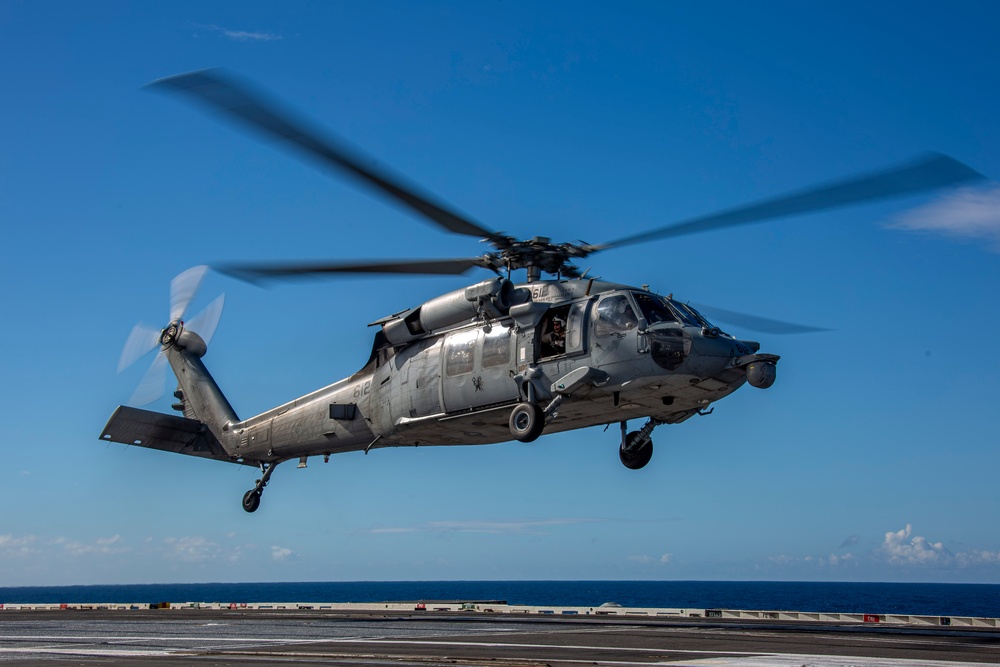
An MH-60S Sea Hawk helicopter, attached to Helicopter Sea Combat Squadron (HSC) 14, takes off from the flight deck of Nimitz-class aircraft carrier USS Abraham Lincoln (CVN 72) on Nov. 22, 2025. USS Abraham Lincoln (CVN 72), flagship of the Abraham Lincoln Carrier Strike Group, is underway conducting routine operations in the U.S. 3rd Fleet area of operations, demonstrating the U.S. Navy’s long-term commitment to a free and open Indo-Pacific. (U.S. Navy photo by Mass Communication Specialist Seaman Daniel Kimmelman)
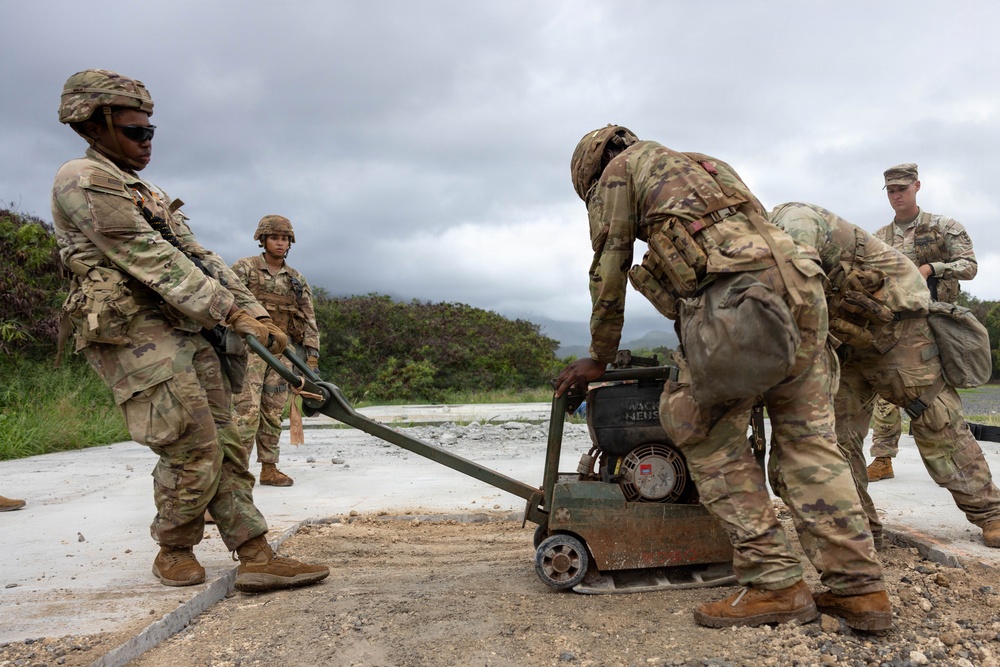
U.S. Soldiers, assigned to the 523rd Engineer Support Company, 84th Engineer Battalion, compact backfill material into a damaged area during joint airfield damage repair training at Marine Corps Training Area Bellows, Hawaii, on Nov. 19th, 2025. Service members cleared, evaluated, and restored a concrete crater to validate their proficiency in airfield repair. Military engineers train in airfield repair for the purpose of sustaining combat power, mobility, and logistics in any modern military operation. (U.S. Army photo by Sgt. Samarion Hicks)
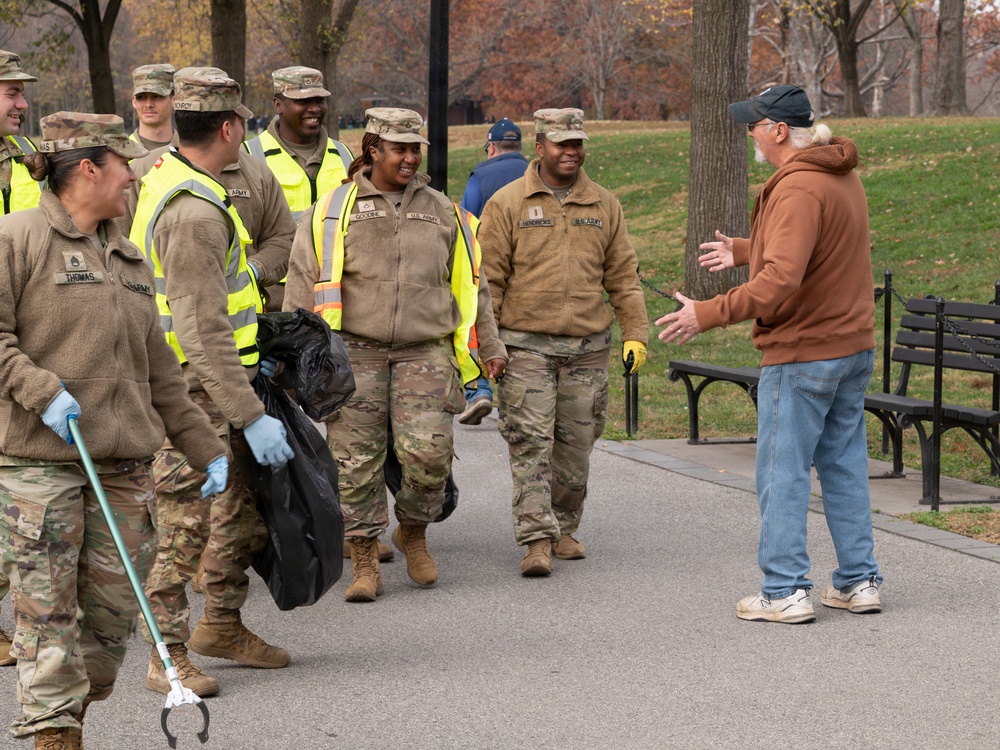
U.S. Army Soldiers from the District of Columbia National Guard and assigned to Joint Task Force – DC, interact with a visitor near the Reflecting Pool in D.C., Nov. 21, 2025, as the JTF completes its beautification efforts. About 2,400 National Guard members support the D.C. Safe and Beautiful mission, providing a visible presence and assistance to law enforcement and community partners to strengthen public safety, resilience and quality of life across the District of Columbia. (U.S. Air National Guard photo by Tech. Sgt. Andrew Enriquez)
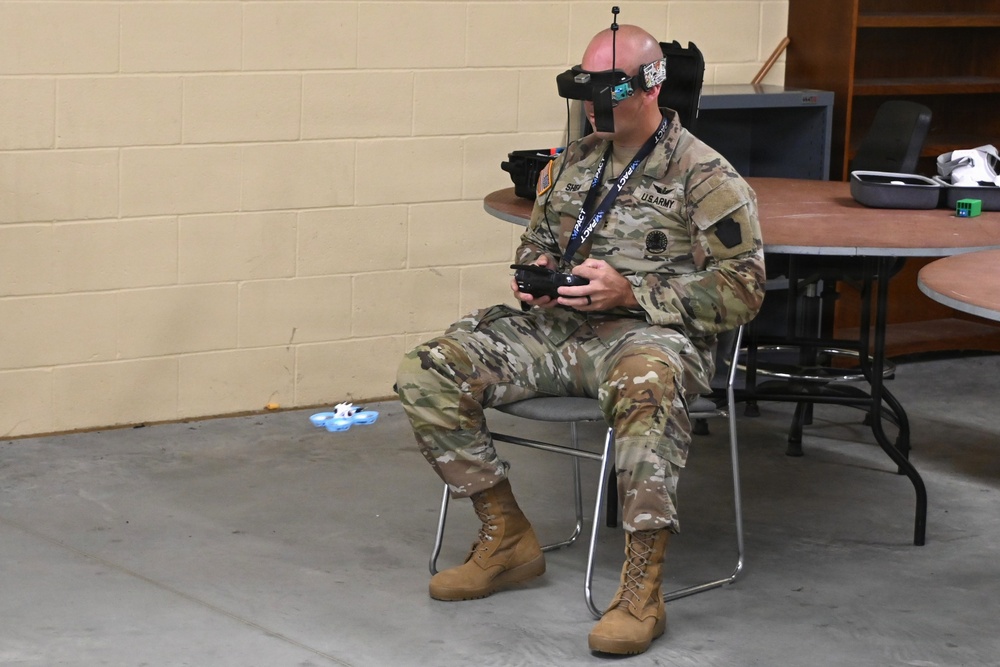
FORT INDIANTOWN GAP, Pa. – In a small aircraft hangar on the east end of post, a makeshift obstacle course has been built primarily from leftover construction material like wood and PVC pipes.
But this isn’t an obstacle course for Soldiers to test their fitness or agility. It’s for operators of unmanned aircraft systems, commonly known as drones.
As we are seeing in Ukraine and elsewhere around the world, drones are becoming more and more prevalent on the modern battlefield. Where once troops and manned vehicles reigned supreme, unmanned systems are now performing numerous missions, including direct attacks, surveillance and target acquisition.
The Pennsylvania National Guard has been using drones for over a decade, mostly for surveillance and reconnaissance. But as tactics have changed in places like Ukraine, Pennsylvania has strived to keep pace.
Chief Warrant Officer 2 Nathan Shea, the UAS operations officer at the UAS facility, said he believes unmanned systems will have an even larger role in future warfare.
“Unmanned systems as a whole – whether that be unmanned aircraft, ground, naval, all of the above – are going to be a massive player in shaping future fights and how we fight,” Shea said. “The more we can remove humans from the front lines and direct combat, I think the more you’re going to see that.”
High stakes training
The UAS facility at Fort Indiantown Gap dates to 2007 and originally housed the RQ-7 Shadow UAS, which was used by the 28th Infantry Division until January 2024 when the Army stopped using Shadows.
The Shadow was a fixed-wing UAS with a 20-foot wingspan that was designed for surveillance, reconnaissance and target acquisition, said Shea, who is a member of the 56th Stryker Brigade Combat Team.
Since the Army has not yet fielded a replacement system for the Shadow, the UAS facility is currently in a transitional phase, so Shea and the other Soldiers who work there are experimenting with different kinds of drones, in particular, first-person-view, of FPV, drones.
The obstacle course, built inside a former Shadow hangar, allows FPV drone operators to practice flying.
“It’s a great indoor, all-weather space that we get to utilize, and it focuses on building out tactics,” Shea said. “Every obstacle, as random as they may seem placed, has a very specific purpose. It’s meant to build accuracy for the pilots.”
Earlier this year, Shea returned from a deployment with the 56th SBCT to Germany where the brigade assumed responsibility of Joint Multinational Training Group – Ukraine, which trains Ukrainian soldiers. His role was to oversee all UAS operations and oversee the UAS training programs for the Ukrainian Armed Forces.
“We trained these operators from nothing to full-blown drone operators ready to go to war in about 45 days’ time,” Shea said. “It was a very high-stress program. The stakes were very high, and there was very little room for error on either party’s part.”
Shea said he built an obstacle course in Germany similar to the one at the UAS facility to train the Ukrainian soldiers, and he plans to build an outdoor training course eventually.
Like other Army units – both active duty and National Guard – Pennsylvania is waiting for funding to build out its UAS capabilities, Shea said. He knows what systems he would like and what systems are needed to fit the different missions.
“There’s no 100 percent answer on a system right now,” Shea said. “What works for the cav (cavalry) is not going to work for the engineers probably. The advantage is we already tested a lot of these systems, so we know what systems we need, we know what modifications we need to make to those systems to make them fit more warfighting functions.”
‘UAS is the future’
At the 166TH Regiment – Regional Training Institute, a U.S. Army school house on Fort Indiantown Gap that offers numerous courses, instructors are teaching students in several military occupational specialties about drones.
On a recent day, Soldiers from around the Army who were attending the infantry Advanced Leader Course received a drone familiarization class.
The class was split in half, with half of the Soldiers conducting dismounted infantry operations and infantry tactics, and the other half of the class discussing drone usage and what’s happening on the front lines right now. While having those discussions, an instructor used a small quad-copter drone to observe the other half of the class in the nearby woods.
“If we look at the operational environment and the battlefields around the world right now, UAS is the future, and we have to address that fight,” said Sgt. 1st Class Mark Thompson, course manager for the infantry ALC at the 166th Regiment. “These guys are going to be the ones on the front lines whatever the next major engagement is, so we want them to be able to see drones and experience them for the first time here in a controlled environment, not on the front lines.
“It’s very, very important for them to be able to start encompassing that in the way that they train, the way that they operate,” Thompson added.
Thompson said the 166th Regiment is implementing drones on a couple different fronts. In addition to the familiarization classes, 1st Battalion also runs the Small Unmanned Aerial System Operator Course where students learn drone basics.
The 166th has been using UASs for several years, and the training is constantly evolving as new technologies and new tactics emerge, Thompson said.
“We have a fantastic staff who are all very dedicated to maintaining the most current up-to-date stuff coming off the battlefield right now, whether that be in the European theater or around the world, or down at the border in the United States, how drones are being implemented by friendly and by enemy assets,” Thompson said. “When we get that stuff, we pretty much have a working group as a staff, discuss the positives and negatives, and then we implement it to the students.”
Thompson said UAS familiarization is very important because it gives Soldiers a foundational knowledge to be able to operate drones with efficiency.
“We want them to be able have that foundational knowledge in a training environment so that when they actually go to do it in real world, they are 10 times more proficient because they have that foundational base,” Thompson said.
Drones in the field
Elsewhere around the Pennsylvania National Guard, Soldiers have increased their usage of drones during training over the past year.
In August 2025, Soldiers with 1-109th Infantry Regiment, 2nd Infantry Brigade Combat Team – along with Soldiers from 1st Battalion, 107th Field Artillery Regiment and representatives of Carnegie Mellon University’s Software Engineering Institute – used drones and artificial intelligence to make calling for artillery fire less stressful for Soldiers on the battlefield.
The exercise, which is part of Project Shrike, used a software package developed by CMU’s SEI in partnership with the U.S. Army Artificial Intelligence Integration Center that is an AI-enabled system that allows artillery units to detect, target and engage threats with enhanced speed and precision. The project reduces the complex task of calling for fire to mere seconds.
“The system highlights targets and recommends firing solutions for operator decision,” said Chad Hershberger, a software engineer with CMU’s SEI. “The human is in the decision loop in order to accept or reject the system’s recommendation.”
In a similar exercise in November 2024, instructors from the 166th Regiment’s 1st Battalion used quad-copter drones to gather target information and send it to students taking the artillery Advanced Leader Course under the guidance of instructors from 2nd Battalion. The students then engaged the targets with howitzers.
They also used drones to observe the fall of the artillery rounds, make required adjustments and to conduct battle-damage assessments.
“We’ve been seeing it through open-source intelligence, obviously in the conflict that’s going on in Ukraine, that they’ve been doing a lot of these things, so we’re adjusting with the times, and we’re developing procedures and efficiencies in order to conduct these tasks,” said Sgt. 1st Class Richard Hutnik, quality assurance noncommissioned officer for 1st Battalion who was piloting a drone during the exercise.
Whether on an obstacle course, in a classroom or in a field training environment, the Pennsylvania National Guard is attempting to stay at the forefront of drone tactics and technology as drone usage continually increases on the battlefield.


![DVIDS – Images – Coalition forces conduct close quarters combat training during Exercise Ferocious Falcon 6 [Image 4 of 10]](https://101veterans.com/wp-content/uploads/2025/11/1763914179_1000w_q95.jpg "DVIDS – Images – Coalition forces conduct close quarters combat training during Exercise Ferocious Falcon 6 [Image 4 of 10]")


 Private Internet Access gives you unparalleled access to thousands
of next-gen servers in over 83 countries and each US state. Your
VPN experience will always be fast, smooth, and reliable.
Private Internet Access gives you unparalleled access to thousands
of next-gen servers in over 83 countries and each US state. Your
VPN experience will always be fast, smooth, and reliable. View original content:
![DVIDS – Images – Unified Command continues efforts to stop fire on cargo vessel at the Port of Los Angeles [Image 3 of 3]](https://101veterans.com/wp-content/uploads/2025/11/1763907227_1000w_q95.jpg "DVIDS – Images – Unified Command continues efforts to stop fire on cargo vessel at the Port of Los Angeles [Image 3 of 3]")
 View original content to download multimedia: